
IDOC Release Record Authority
The Idaho Department of Correction operates the state correctional system. Its public material reports ten prisons, five operating community reentry centers, and seven probation and parole districts. IDOC also administers felony community supervision. The Commission of Pardons & Parole makes parole decisions, while the sentencing court controls probation. IDOC carries out state custody, sentence administration, and day-to-day supervision.
The agency calls its locator the Resident/Client Search. That name reflects its broad scope. It includes people incarcerated under IDOC authority, people on felony probation or parole, and names of people who served time and satisfied their sentence. It is not a county booking archive. A person released on bond from a local jail may never appear there unless a separate state sentence or supervision term places the person within IDOC jurisdiction.
The IDOC home page shows the official agency identity and statewide service links.
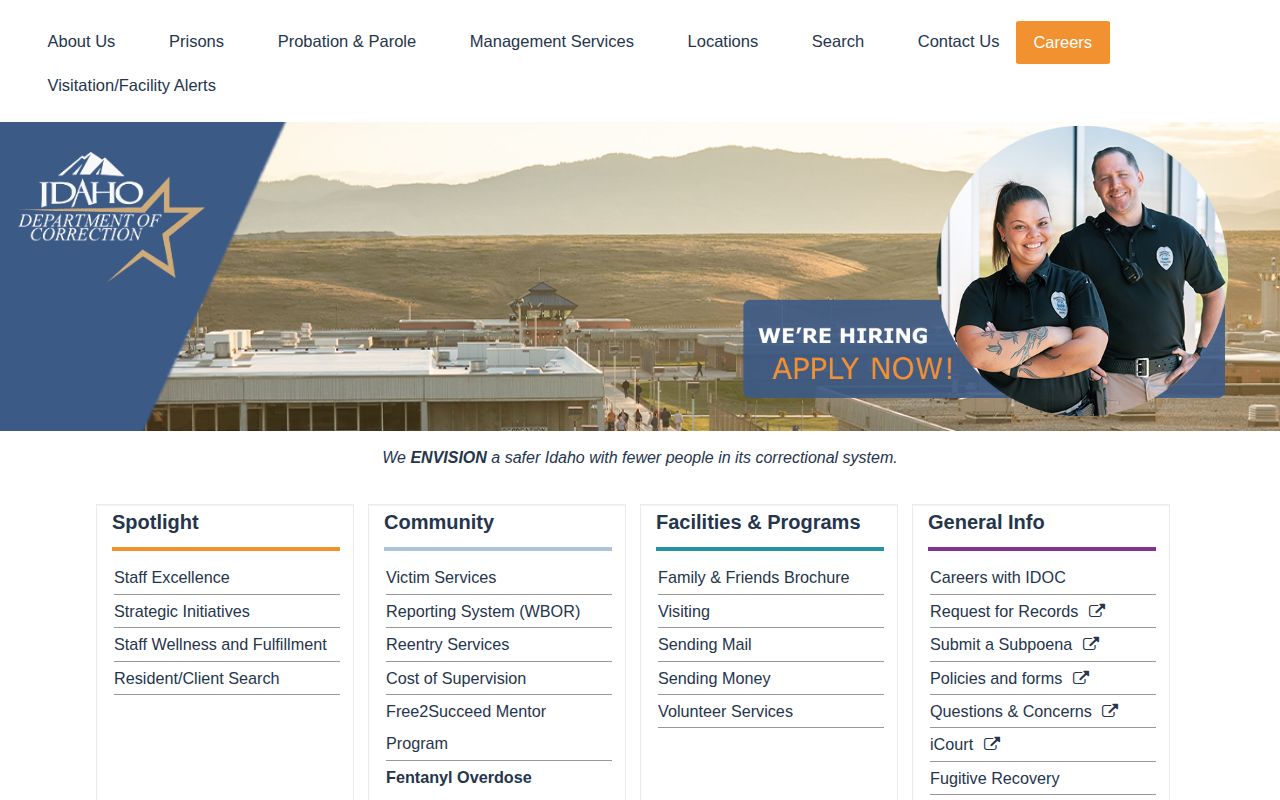
This agency page is the starting point for state prison, sentence, supervision, and records channels.
Use the IDOC Offender Search
The official IDOC Resident/Client Search accepts a last name or an IDOC number. First name is optional. A partial last name must begin with at least two characters, while an IDOC-number fragment must begin with at least three digits. The result list shows IDOC Number, Last Name, First, Middle Name, Birth Year, and Status. IDOC cautions that one person may have more than one IDOC number.
The search is refreshed daily, but release facts can change fast. Match the birth year and open the detail record. Do not rely on the name row alone. A result can say In custody, In community, Discharged [date], or another status such as Active Bench Warrant. Each term points to a different legal and custody posture.
- Open the official Resident/Client Search and enter the known IDOC number when possible.
- Otherwise, enter the last name and narrow the matches with first name and birth year.
- Open the detail page and compare the top status with every sentence row.
- Record the supervising or physical location and each relevant release, hearing, and satisfaction date.
- Confirm uncertain or same-day information with the responsible IDOC unit or records process.
The IDOC search form states its search rules and warns that the data may change quickly.
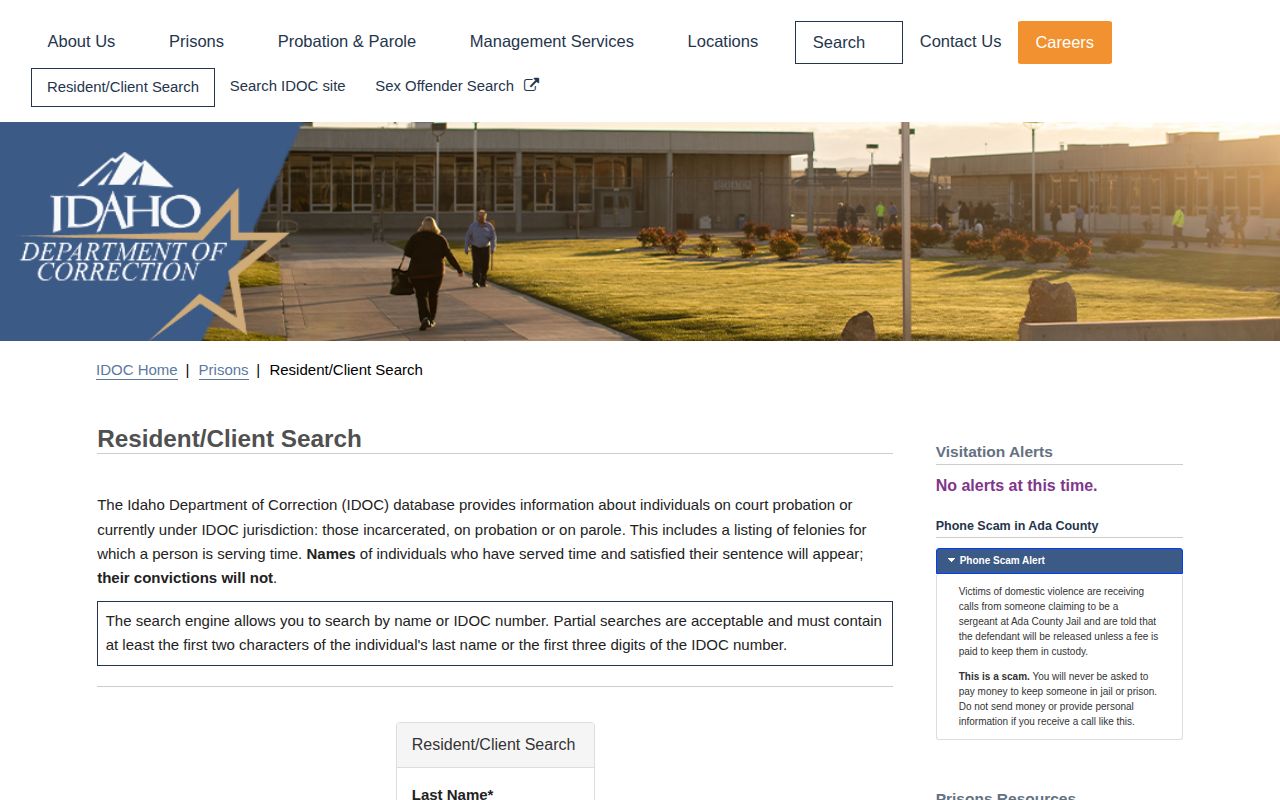
Those limits make careful identifiers and a detail-page review essential.
IDOC Released Inmate Statuses
Top-level status and sentence status answer separate questions. In custody places the person in an IDOC custody context. In community means an active community supervision connection, but it does not say whether that connection began with prison parole or direct court probation. Discharged [date] means IDOC displays the sentence as satisfied. The agency keeps the person’s name visible at that point but suppresses the former conviction on the public satisfied-sentence entry.
Sentence rows can use labels such as Parole, Probation, Termer, Rider, or Parole Violator. A parole row with Released to Supervision is strong public support for an earlier prison exit into parole. A probation row may reflect direct court supervision without a state-prison release. A Rider row denotes retained jurisdiction, an IDOC placement in which the court remains central to the outcome. It is not a discharge or a promise of community release.
| Public field | How to read it |
|---|---|
| IDOC Number | Agency identifier; compare all possible records because duplicates can occur. |
| Top Status | Current public category such as In custody, In community, or Discharged. |
| Released to Supervision | Most recent placement on supervision by a court or the Commission. |
| Parole Eligibility Date | Earliest parole consideration point, not an assured prison exit. |
| Sentence Satisfaction Date | Displayed sentence end or maximum point, not always the prison-gate date. |
| Supervising District | IDOC office tied to active community supervision. |
The IDOC results view places the main status beside the person’s identifying fields.
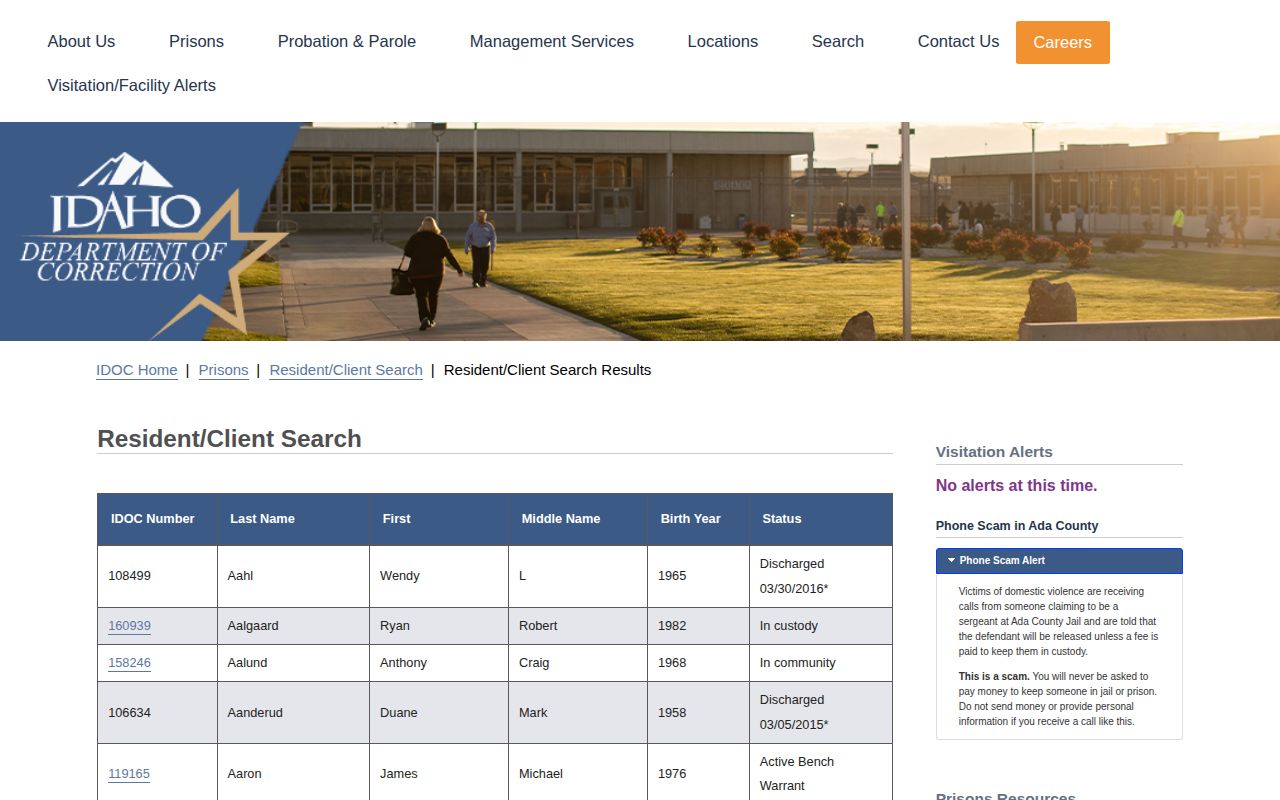
The status column is a starting signal, not a substitute for the underlying detail record.
IDOC Release Versus Discharge
Physical release from prison may happen before final discharge. Idaho uses a unified sentence with a fixed, or determinate, portion and a later indeterminate portion when the court imposes both. The fixed term generally must be served before parole eligibility. Parole is discretionary. If the Commission grants parole and IDOC completes the required plan, programs, and processing, the person can leave the institution but remain under IDOC authority in the community.
Final discharge means something else. A former prisoner may serve parole until the sentence satisfaction date and only then reach the public Discharged [date] display. The Commission also describes a final discharge notice called a Gold Seal. It is sent to the last supervision district for forwarding and may take up to a month to process. The web status, physical prison exit, end of supervision, and paper notice can therefore fall on different days.
The official discharged detail example demonstrates the dated discharge format without establishing facts about anyone else.
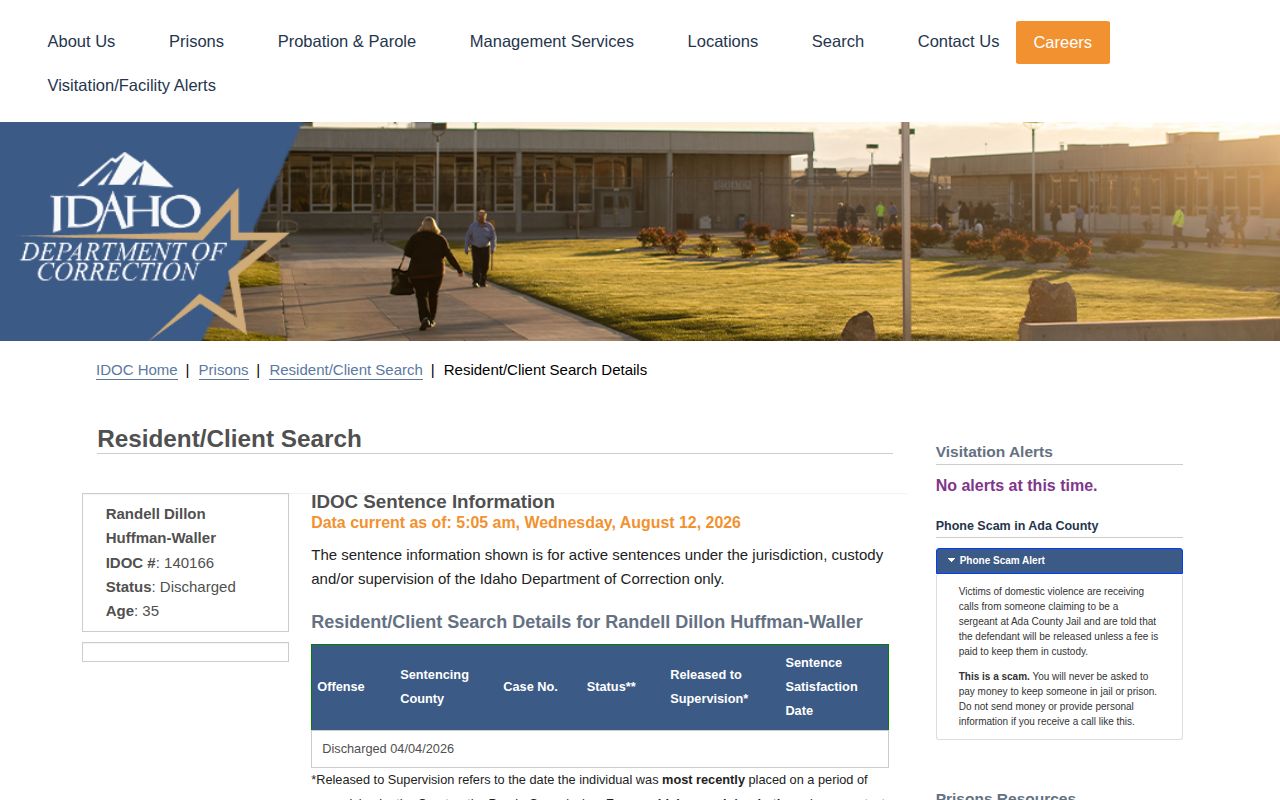
The dated label shows sentence satisfaction under IDOC, not necessarily the first day outside prison.
Idaho Prison Release Framework
Idaho Code §19-2513 sets the unified-sentence structure. The determinate term is real confinement time. Ordinary good conduct does not provide a routine modern shortcut through it. The legacy statutory good-time schedule applies only to offenses committed before July 1, 1986 under IDOC sentence policy. Exceptional meritorious service can support a narrow discretionary reduction under §20-101D, but it creates no entitlement.
A Commission parole grant is conditional. A Notice of Action may show a tentative date, yet required programming, an approved parole plan, and final IDOC processing still control the departure. No one leaves before that tentative date, and the actual release may come later. A grant to detainer only means transfer to another authority rather than ordinary community release.
- Parole
- Conditional release from prison into IDOC community supervision during the sentence.
- Discharge
- End of the sentence jurisdiction shown by the dated satisfied-sentence status.
- Detainer
- A request or hold from another authority that can control where the person goes next.
- Retained jurisdiction
- A rider placement where IDOC houses and evaluates the person while the court retains a key role.
An active community entry can confirm the later stage. The official in-community detail example displays the supervising district, sentence row, and release-to-supervision information.
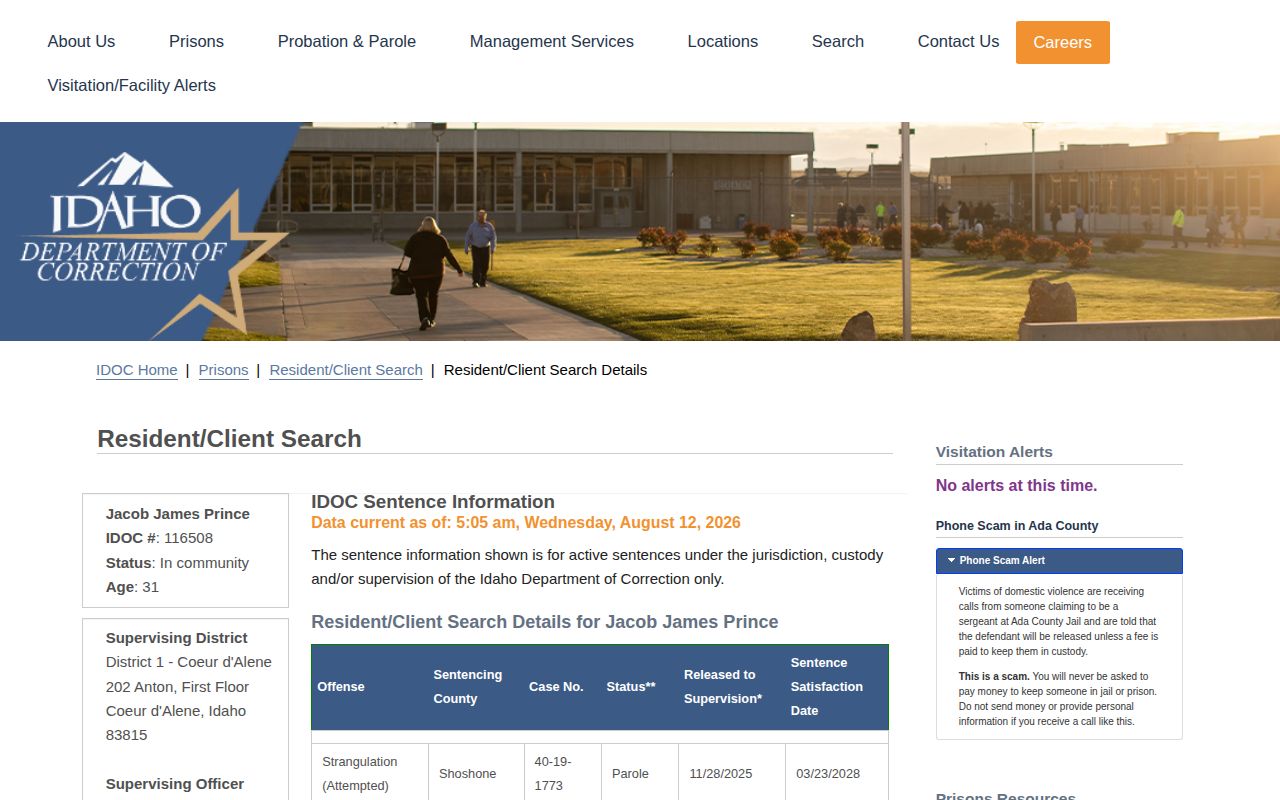
Reading the parole or probation row prevents the broad In community label from being misread.
IDOC Release Locations and CRCs
IDOC releases may follow confinement at a prison or a structured placement at a community reentry center. The five operating centers identified by IDOC are East Boise, Treasure Valley, Idaho Falls, Nampa, and Twin Falls. These centers support transition through structured work release, treatment, community service, accountability, and life-skills activity. Residence there remains an IDOC placement. It should not be described as unconditional release or sentence discharge.
Pocatello Community Reentry Center was marked Coming Soon on the research date, with an opening expected in late fall 2026. Until IDOC publishes an opening notice, that planned site should not be treated as someone’s actual placement. Current physical location must come from the live detail record or the agency. The statewide Facility Directory separates prisons, operating centers, planned facilities, and county custodians.
IDOC says reentry planning starts at arrival and becomes more focused near possible release. A reentry specialist may keep contact for roughly ninety days after departure in a higher-need case. These services help explain why a person may move through several IDOC settings before and after a parole decision.
Idaho Release Pay Funds
IDOC’s release-day funds procedure has a precise limit. Remaining money in the resident’s own account is placed on a preloaded Release Pay debit card by default. According to the Release Pay instructions, activation is free, the card expires after five years, and it carries no maintenance or inactivity fee. The card can be used through listed bank, ATM, and Mastercard channels, or the person can request a paper check.
This payment is not a universal state-funded gate-money stipend. No authoritative Idaho source established a standard cash grant or transportation payment for every released prisoner. The amount, if any, reflects the resident’s remaining account funds. Keeping that distinction clear prevents a release logistics page from promising support that IDOC does not publish.
Property, account funds, release paperwork, and reporting instructions may all be part of departure processing, but they do not prove final discharge. A person released onto parole still must follow the assigned supervision route.
Idaho Release Cohort Trends
The 2026 Timely Release Report gives a defined measure, not a count of every Idaho prison exit. It counted 912 first releases to parole during calendar 2025 among people serving property or drug prison terms. Of that cohort, 754, or 83 percent, occurred before 150 percent of the fixed term, while 158 occurred afterward. The cohort was 2 percent smaller than the 926 cases measured for 2024.
The limits matter. The report does not cover every offense, discharge, transfer, or release type. It should not be read as an annual total of IDOC released inmates. Its value is narrower: it tracks timeliness for the report’s stated population and shows why parole eligibility, readiness, and final processing must be distinguished.
A separate FY2025 Community Population Report counted 15,633 people on active community supervision as of June 30, 2025. That included 11,058 on probation and 4,575 on parole. The report excludes several categories, including people then incarcerated, in federal or immigration custody, absconded, on parole-violation status, or on bench warrant. It is a supervision snapshot, not a release total.
IDOC Versus County Release Records
Idaho county jails and IDOC answer different release questions. A sheriff may release someone on bond, recognizance, a court order, dismissal, time served, or completion of a local sentence. The same jail may transfer a person to IDOC, another county, federal authorities, or immigration custody. A disappearance from the live roster proves only that the roster no longer shows the person there.
| Question | IDOC record | County record |
|---|---|---|
| Primary scope | State prison, felony supervision, and state sentence discharge | Local booking, jail custody, and local exit event |
| Released evidence | Parole row, Released to Supervision, or Discharged date | Sheriff release record, court order, or transfer notation |
| Transfer clue | New IDOC location or state status | Receiving agency or destination in the local record |
| No result | Check identifiers, county, court, and records request | Check receiver, IDOC, court, BOP, or ICE as facts require |
Rural custody arrangements make this boundary important. Some counties use holding sites or receiving counties, and Cassia and Minidoka share a regional facility. Follow the sending and receiving agencies before calling an exit a community release.
A no-result in one system should change the next question, not end the search. When a county roster entry vanishes after a felony commitment, check IDOC for a new custody record. When IDOC shows no state connection, return to the sheriff, court, or documented receiver. Federal cases call for the BOP locator after sentence, while a possible immigration transfer calls for ICE’s system. The key is to follow authority from one verified event to the next. Do not merge separate records merely because the names match.
Request IDOC Release Records
IDOC Sentencing Records reviews judgments, calculates sentences, applies jail and retained-jurisdiction credit, processes parole-forfeiture actions, and maintains sentencing data. The unit cannot change a judicial sentence or give legal advice. When the public detail page does not resolve a release-to-supervision date, discharge record, custody-status history, or sentence calculation, a narrow public-record request is the proper next step.
Use the IDOC JustFOIA portal. Identify the person with full name, birth year or date when appropriate, IDOC number, sentencing county, and case number. Ask for a defined document or field rather than an entire institutional file. Idaho law permits exemptions and redactions for protected correctional, safety, security, medical, victim, and investigatory material.
For Idaho residents, the first two labor hours and first 100 paper pages are free under the Public Records Act. Qualifying costs may apply beyond those limits. Nonresident requests can carry actual costs, and the extended response period may differ by residence. The law allows added retrieval time of up to ten working days for residents and up to 35 days for nonresidents. Those are outer retrieval notices, not promises that every request will take that long.
A denial or partial denial should be written and identify the legal ground. Section 74-105 protects specified correctional material when confidentiality, safety, security, or habilitation concerns control. Section 74-124 addresses investigatory records whose disclosure could interfere with enforcement, invade privacy, expose protected methods, or endanger a person. Requesting the exact release, supervision, satisfaction, or calculation record keeps the scope tied to the event being verified.
The official IDOC records portal provides the durable request route when the daily search is incomplete or unclear.
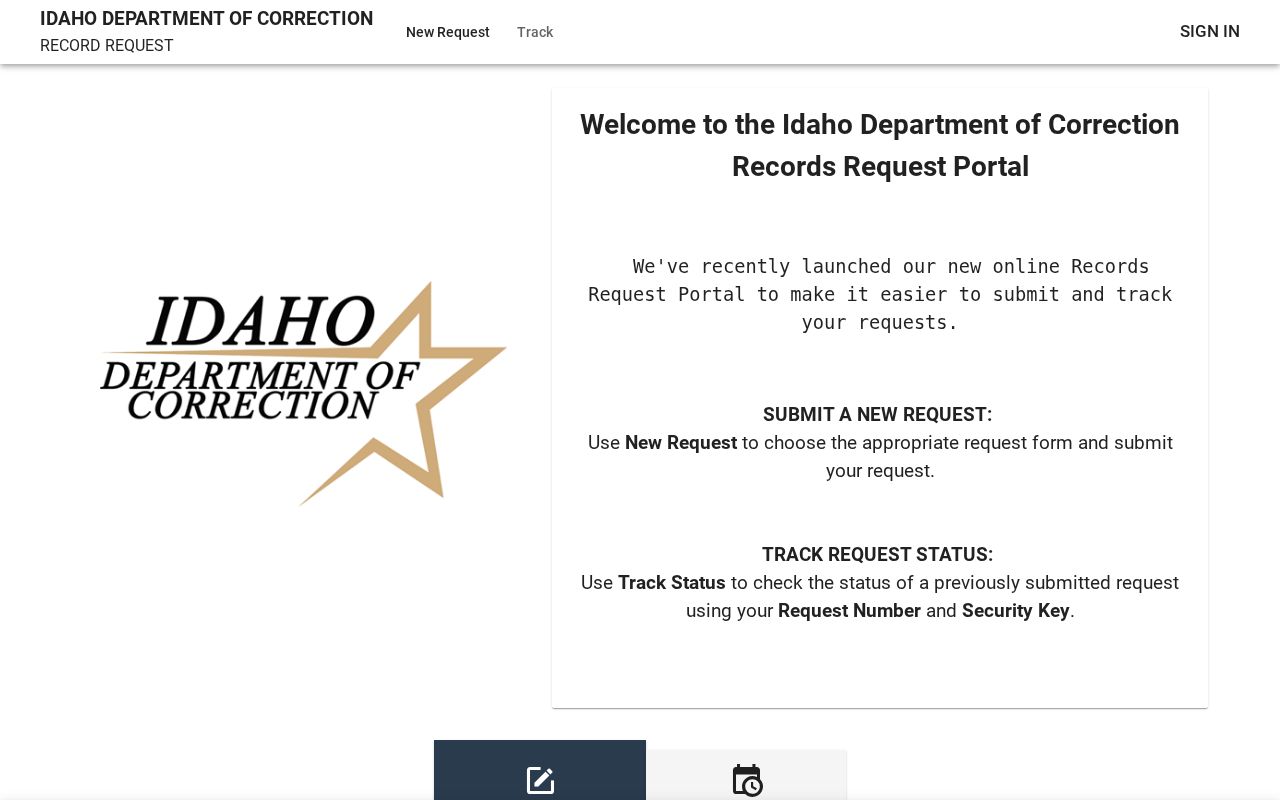
A focused request gives the records officer a clearer custody event, sentence date, or discharge document to locate.