
Idaho VINELink Release Coverage
Idaho VINE is the notification system, while VINELink is its web and app entry point. The Idaho Department of Correction confirms a feed for people under its jurisdiction. The Idaho Sheriffs’ Association says the statewide program interfaces with jail booking systems throughout Idaho. However, no current official static inventory proves that every county feed is always available. The accurate description is participating Idaho jail and IDOC feeds.
VINE works best while a person is still tied to a feed. A registered user may receive phone, text, or email notice after a release, transfer, or other tracked movement. County jail coverage concerns a local custodian. IDOC coverage concerns a state resident or client. A county roster disappearance can also mean transfer to IDOC, another jail, federal authorities, immigration custody, court movement, or a data change, so the VINE result must be read in that wider custody path.
The official VINELink state-selection screen is the entry to Idaho person search and registration.
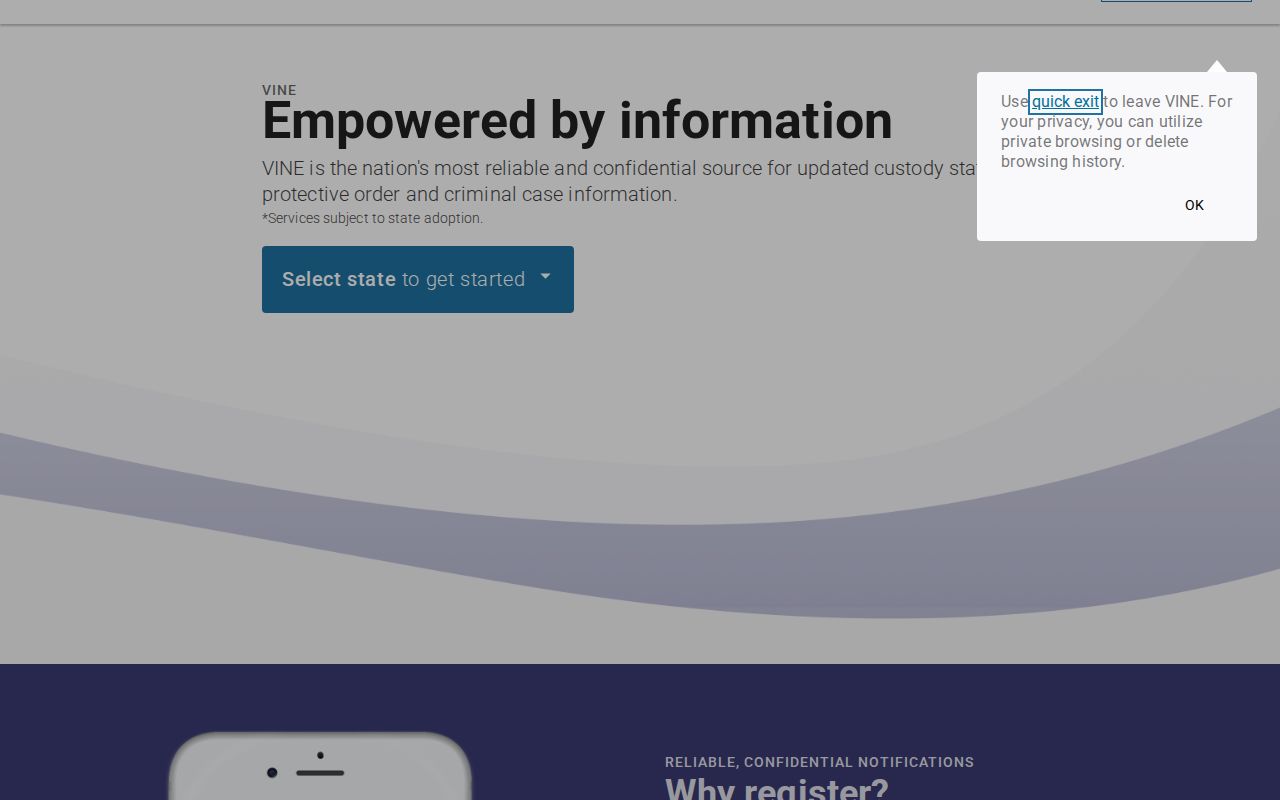
Selecting Idaho opens the live options that matter. Those options, not an old static list, show which agency and record feeds can be searched at that time.
Search One Idaho Person on VINELink
A specific-person check should use the strongest identifier available. Names can be shared, spelled in more than one way, or entered differently by separate agencies. An offender or booking identifier usually narrows the result. The live interface determines the fields offered for the selected Idaho agency, so do not assume every jail exposes the same inputs.
- Open VINELink and choose Idaho from the state selector.
- Select the relevant agency or custody source when the interface asks. Start with the jail that booked the person or IDOC for state jurisdiction.
- Enter the available name or identifier. Try a careful alternate spelling only when the first search fails.
- Compare every likely match by displayed identifier, age or birth information, agency, and custody location before opening the record.
- Read the status and source agency. Save the agency name and record identifier for later confirmation.
For a likely state client, compare the match with the official IDOC Resident/Client Search. IDOC accepts a last name or IDOC-number input and provides birth year plus status in its results.
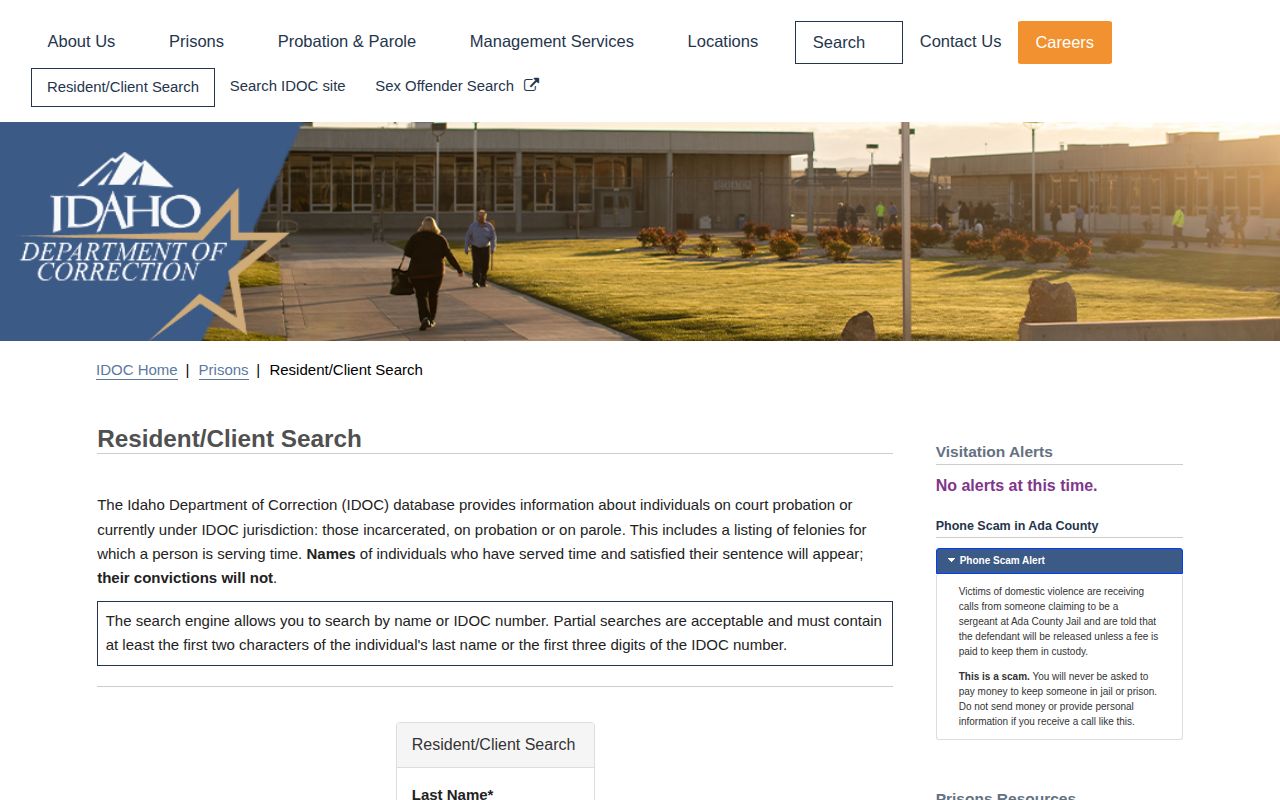
The corrections search is not a replacement for a participating county-jail feed. It becomes relevant when state prison, probation, parole, transfer to IDOC, or sentence discharge is involved.
Note: Check identity before registering because a shared name can attach alerts to the wrong Idaho custody record.
Idaho VINELink Release Fields
The exact fields depend on the participating source and current interface. Research did not establish one universal Idaho released-result label, so no such label should be invented. A useful record may provide the pieces below. Their main purpose is to identify the person, identify the custodian, and show the status that triggered the check.
| Field | What it can establish |
|---|---|
| Name | The name associated with the selected agency record; match it with another identifier |
| Record or offender ID | A stronger link to one booking, jail, or corrections identity |
| Agency | The jail or state corrections source supplying the feed |
| Custody status | The status currently sent by that source, subject to processing lag |
| Facility or location | The reported custodian or placement, not a promise of present physical location |
| Event or update | A release, transfer, or other tracked status change when the feed provides it |
| Notification choices | The phone, text, or email routes offered for that record |
A scheduled or expected event is not the same as a completed event. A county order can change, a transfer can replace community release, and a Commission grant can remain conditional. Treat the source agency’s actual release record as the stronger final confirmation.
Register an Idaho Release Alert
Registration is most useful before the expected custody change. IDOC’s current notice describes free phone, text, and email updates for people in its jurisdiction. The Idaho VINE phone line is available around the clock at 866-984-6343. The notice also lists IDOC victim-services help at 208-605-4774 during business hours. Registration belongs in the official VINELink service or app.
- Open the correct person record and confirm the source agency, identifier, and status.
- Choose the registration or notification control attached to that record.
- Select the available phone, text, or email channel. More than one channel may help when the live interface permits it.
- Enter the requested contact information and complete the PIN or confirmation step shown by VINELink.
- Keep the PIN and record details secure, then follow any alert with a check of the responsible jail or IDOC record.
A PIN helps the service manage a registered notification. It should not be sent to a jail, IDOC, or an unrelated web form. The delivery of an alert also does not prove where the person went. It marks a feed event that needs source confirmation.
Note: Keep notification credentials within official VINELink and use the source agency’s own record to verify the reported event.
Confirm an Idaho State Release
IDOC results use several distinct top-level statuses. In custody means the person remains in an IDOC custody context. In community can mean probation or parole. Discharged [date] means the sentence was satisfied. An active bench warrant or fugitive-related result is neither a clean discharge nor proof of present community release.
The IDOC results page shows the columns and status vocabulary used by the daily statewide search.
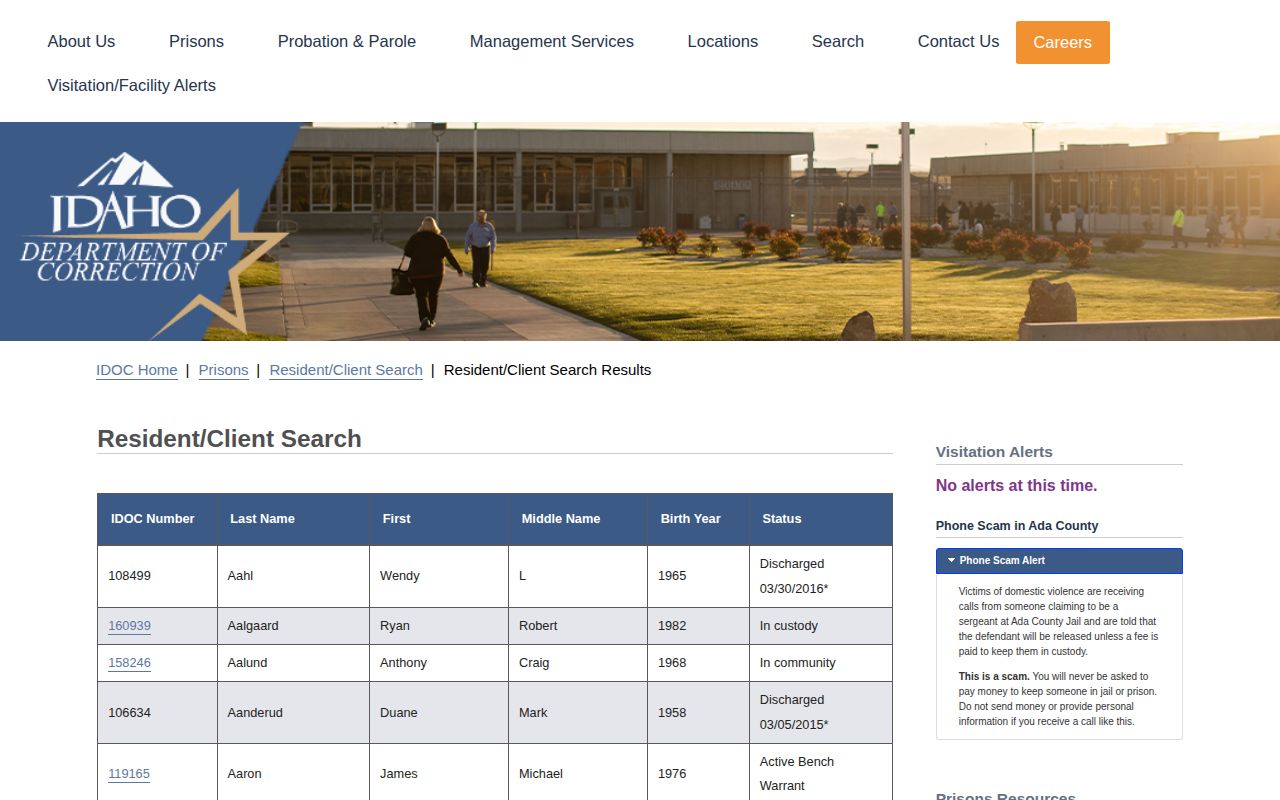
Open the detail record after matching the name, birth year, and IDOC number. A Parole row plus Released to Supervision is stronger evidence of a prison-to-parole move than In community alone, since a Probation row may not involve prison release.
For a county-jail event, contact the jail or sheriff that supplied the feed. A live roster usually focuses on people still held, so the responsible release record or event log may be needed after the person disappears. The statewide Idaho released-inmate workflow separates county, IDOC, court, immigration, and federal checks.
Idaho VINELink Release Limits
VINELink is not a complete historical release archive. Feed coverage can change. Booking data may lag. Name searches can miss a match. A county may not be visible in the selector at that moment, and a person may move between custodians. The service also does not replace a court order, Commission action, IDOC sentence detail, or agency public record.
- A missing result does not prove release.
- A release alert does not identify every later custodian.
- A transfer alert is not community release.
- A scheduled date is not a completed release event.
- An IDOC community result can be probation rather than parole.
- Federal BOP custody is outside VINELink’s state and county scope.
When the event is unclear, save the record ID, date, and source agency. Ask that agency for the specific custody or release event rather than a broad file. For state records, IDOC’s daily detail page and narrow public-record request can clarify supervision or discharge. For a county event, the sheriff’s record is the first source.
Time also changes the best route. Before release, registration can provide notice of a later feed event. Just after an alert, the agency record can verify whether the event was release, transfer, or another status change. Long afterward, a county booking record, court disposition, IDOC discharged result, or focused records request may work better because VINELink is not designed as a permanent historical archive.
Note: VINELink is a notice channel, not proof that every Idaho county feed is available or current at all times.
Idaho VINE Outage and Restoration
Idaho has a documented VINE service interruption. IDOC announced on March 14, 2024 that its VINE services had been restored on March 6 after an outage. The dated notice confirms the restored IDOC feed and current phone, text, and email choices. Older Commission content may still contain stale outage wording.
The IDOC restoration notice should control over undated or older statements about the state corrections feed. Still, a restoration announcement is not a guarantee that every local jail interface will be present forever. Use the live Idaho selector and person record for current availability.
This history also explains why alerts need a second source. A notification system can experience a gap even when the custodian’s own record remains available. If a known event produces no alert, check the jail or IDOC rather than assuming the event did not occur.
Note: Dated IDOC restoration guidance controls over older outage text, but live VINELink availability still determines what can be searched now.
Federal Releases Need BOP Search
VINELink does not cover federal sentenced custody. The BOP Inmate Locator covers federal records for people released after 1982. A past Release Date with no facility, or a location of RELEASED, means the person is no longer in BOP custody. A future date is projected, while UNKNOWN means the term is not determined.
The federal BOP locator uses its own name and number search rather than an Idaho VINE feed.
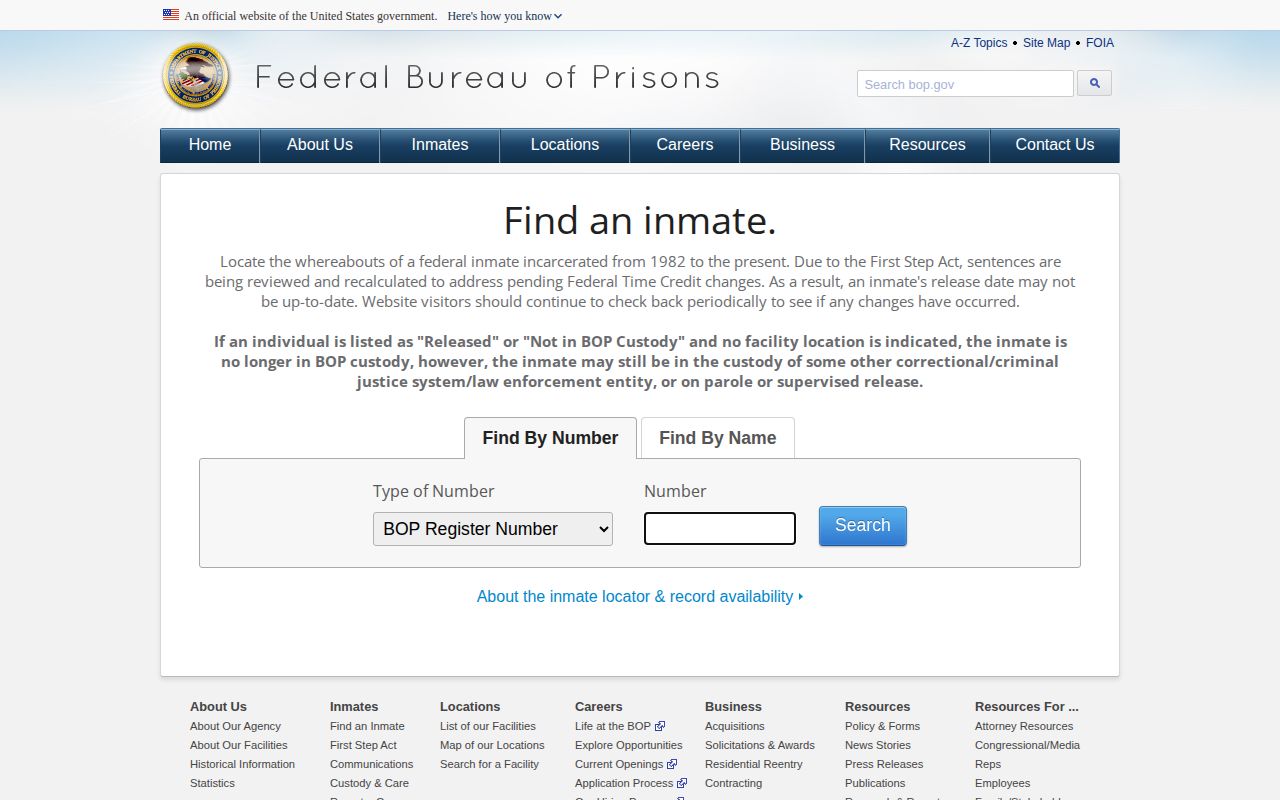
No BOP institution was identified in Idaho. A federal arrestee may be housed in a contracted local jail before sentence and later assigned out of state, so the arrest location does not define the proper long-term locator.
A BOP released result does not prove that all federal supervision ended, and it does not rule out state, local, or immigration custody. If a jail exit may have led to civil immigration custody, ICE uses a separate locator. Each system answers only for its own authority.
Match Idaho Alerts to Custody
A useful final check asks which authority controlled the person before and after the event. A sheriff release to the community belongs with the county record. A sheriff transfer to IDOC should lead to the Resident/Client Search. A Commission grant must be followed through IDOC processing. A move to another county, the U.S. Marshals Service, BOP, or ICE remains a transfer even though the first jail no longer lists the person.
Write down the agency, identifier, event date, and wording shown in the alert. Then compare those items with the next custodian’s record. This simple chain avoids treating a no-result in one system as proof of freedom from every system. It also keeps a notification in its proper role: fast notice of a reported change, followed by authoritative verification from the office that created the custody record.
If two sources update at different times, keep both retrieval times. The newer agency record may resolve a VINE status that has not yet refreshed.