
Idaho Projected Versus Actual Release
A projected date estimates or schedules a future event. An actual release date records an event that already happened. Idaho’s public IDOC detail pages do not use one field called Projected Release Date. Instead, they may show Parole Eligibility Date, Next Parole Hearing Date, Sentence Satisfaction Date, Released to Supervision, and Retained Jurisdiction End Date. A Commission decision may add a tentative parole date. Each answers a different question.
A pretrial detainee usually has no fixed release date. Bond action, a court order, dismissal, plea, transfer, or later sentence can change the custody path. Local jail and court records control that inquiry. A sentenced county-jail inmate may have a locally calculated end date, while an IDOC prisoner’s public dates arise from the state sentence and parole framework. The responsible custodian must be identified first.
The official IDOC custody-date example shows how parole eligibility, a hearing date, and sentence satisfaction can appear together.
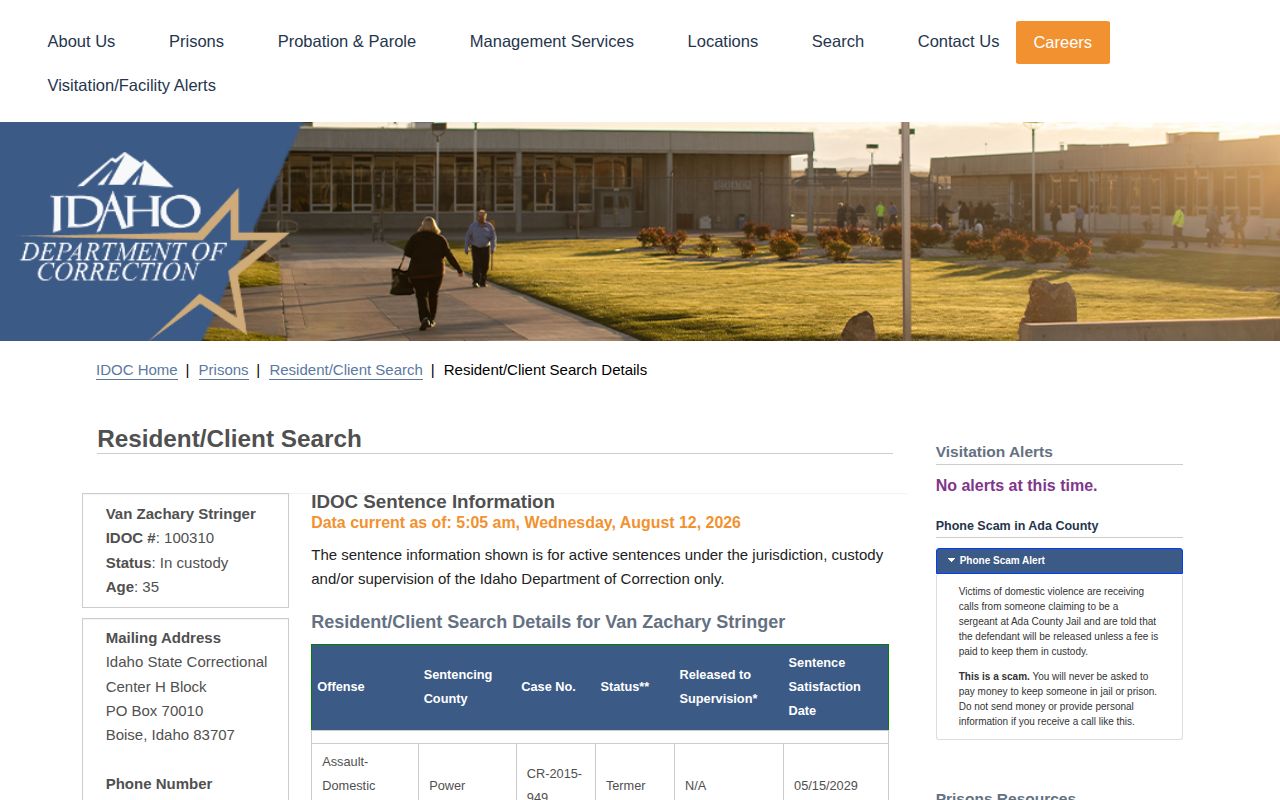
The separate labels prevent one future date from being mistaken for a firm exit date.
Find an Idaho Inmate Release Date
Start with the official IDOC Resident/Client Search for a person under state correctional jurisdiction. Search by last name or IDOC number. A partial last name needs at least two starting characters, and an IDOC-number fragment needs at least three digits. Results supply a birth year and status, which help distinguish people with similar names. IDOC also warns that one person can have more than one agency number.
- Identify whether the person is in a county jail, an IDOC institution, or another authority’s custody.
- Search IDOC by number when known; otherwise use name and birth year to narrow the result.
- Open the detail page and read the top status plus every current sentence row.
- Compare eligibility, hearing, supervision, and satisfaction dates without treating them as synonyms.
- Check the Commission decision when parole is involved, then confirm the actual event through IDOC.
- Ask IDOC Sentencing Records for a calculation when multiple cases or credits leave doubt.
The Resident/Client Search screen explains the accepted identifiers and daily-update limits.
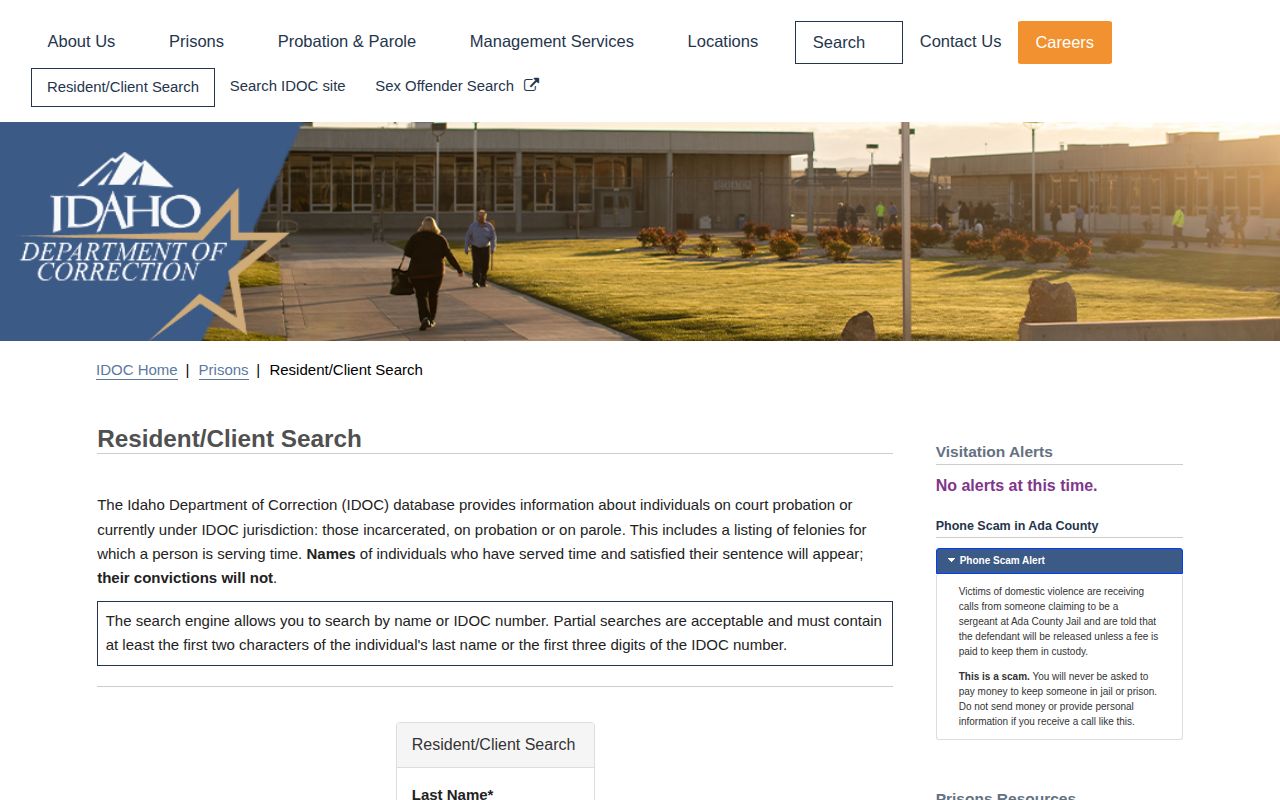
A strong match begins with the right person and continues into the detailed sentence record.
Read Idaho Release Date Fields
The Parole Eligibility Date, often shortened to PED, is the earliest point when the Commission may consider parole after the fixed portion and sentence structure are applied. It is not a right to release. IDOC says initial hearings are often set six to nine months before the PED, so a Next Parole Hearing Date can lawfully come first. A hearing can result in a grant, denial, continuation, or another action.
Sentence Satisfaction Date marks the displayed maximum or end point for that sentence. It is not always the likely prison departure day because parole may permit an earlier prison exit followed by supervision. Consecutive sentences, violations, and other cases can control the timeline. Retained Jurisdiction End Date belongs to a rider placement and should not be described as discharge. Released to Supervision is retrospective: it records the most recent placement on supervision by a court or the Commission.
| IDOC label | Meaning for release timing |
|---|---|
| Parole Eligibility Date | Earliest possible Commission consideration after the controlling fixed term. |
| Next Parole Hearing Date | Scheduled review event; it can precede eligibility and does not promise release. |
| Sentence Satisfaction Date | Displayed maximum or sentence-end date, subject to the full case structure. |
| Released to Supervision | Past placement onto probation or parole, read with the sentence status. |
| Retained Jurisdiction End Date | End point for a rider phase, with the court still important to disposition. |
| Tentative | Conditional parole date in a Commission notice, not actual departure proof. |
The IDOC results page shows the high-level status before a searcher opens the date fields.
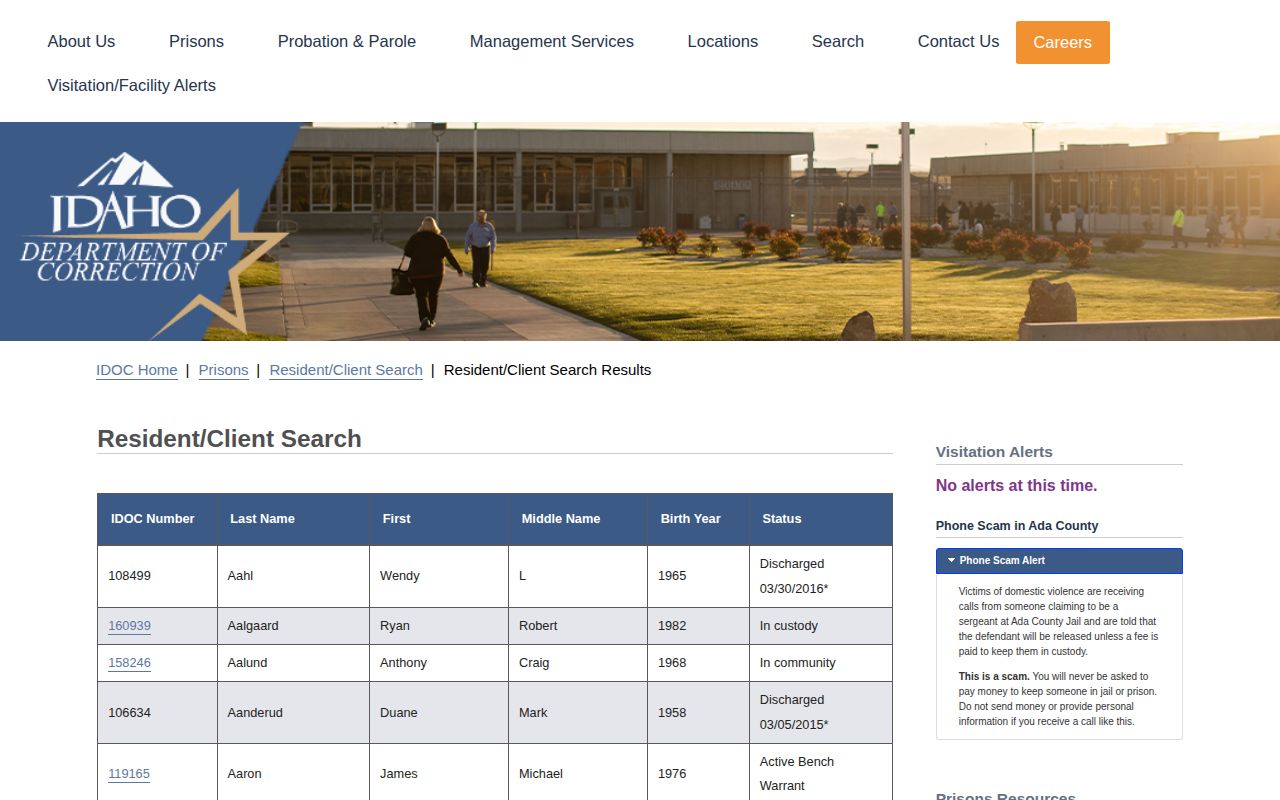
The result status helps select the right record, but the sentence rows control how each date should be understood.
Idaho Good-Time Release Rules
Idaho does not use the common generic shortcut of assuming a modern prisoner serves a fixed percentage of the sentence. Idaho Code §19-2513 requires the court to state a minimum period of confinement and, when imposed, a later indeterminate period. During the fixed portion, ordinary parole or discharge is barred, subject only to narrow statutory exceptions. The fixed term is real confinement time.
The state has a good-conduct statute, but its reach is historical. IDOC’s Sentence Administration policy explains that statutory good time under §20-101A reduces the final release date only for offenses committed before July 1, 1986. For later offenses, there is no ordinary statutory good-time deduction. Modern dates should never be estimated by subtracting a standard block of good-time days.
Exceptional meritorious service under §20-101D is narrow and discretionary. IDAPA 06.01.01 states that no person has a right or entitlement to such a reduction. An award may also be withdrawn through the prescribed process for serious misconduct, escape, or a new crime. This authority is not an earned-time calculator.
| Rule | Effect on an Idaho release date |
|---|---|
| Unified fixed term | Must ordinarily be served before parole consideration begins. |
| Legacy statutory good time | Applies through IDOC policy only to offenses before July 1, 1986. |
| Modern ordinary good time | No routine statutory deduction for later offenses. |
| Exceptional meritorious service | Discretionary, narrow, and not an entitlement or standard formula. |
No Modern Idaho Time Shortcut
Idaho’s release-date rule is distinctive because three sources must be read together. The unified-sentence statute sets the fixed term. The legacy good-time statute and IDOC policy confine routine statutory credit to old offenses. The exceptional-service statute creates only a possible discretionary reduction. None supports a broad percentage rule for current Idaho sentences.
A sound estimate therefore begins with the judgment and each sentence row, not an online sentence calculator. Determine whether terms run concurrently, at the same time, or consecutively, one after another. Check the sentencing county and case number. Then compare the PED and satisfaction date with any Commission action. Jail credit, retained-jurisdiction credit, and parole-forfeiture action are sentence-calculation matters handled by IDOC Sentencing Records based on the court documents.
This approach also avoids a false promise. Conduct can affect prison administration and a rare meritorious award may affect a term, but neither fact creates a routine modern good-time release date. Only the official calculation can resolve an individual record.
Idaho Tentative Parole Dates
The Commission of Pardons & Parole publishes Notices of Action Taken. A notice can show Grant Parole and a Tentative date, but the date remains conditional. Required programming, an approved IDOC parole plan, and final processing must be complete. The Commission states that no one is released before that date, while actual departure may occur later.
Other decision labels point elsewhere. Deny Parole does not authorize release. Deny and Pass to Full Term Release Date keeps the full-term route in view. Continue defers the matter. Grant Parole to Detainer Only means movement to another custody authority, not ordinary release to the community. Revocation actions concern a person already on a parole pathway. Read the exact result.
The Commission decision archive shows the weekly and monthly PDF notices and its tentative-date caution.
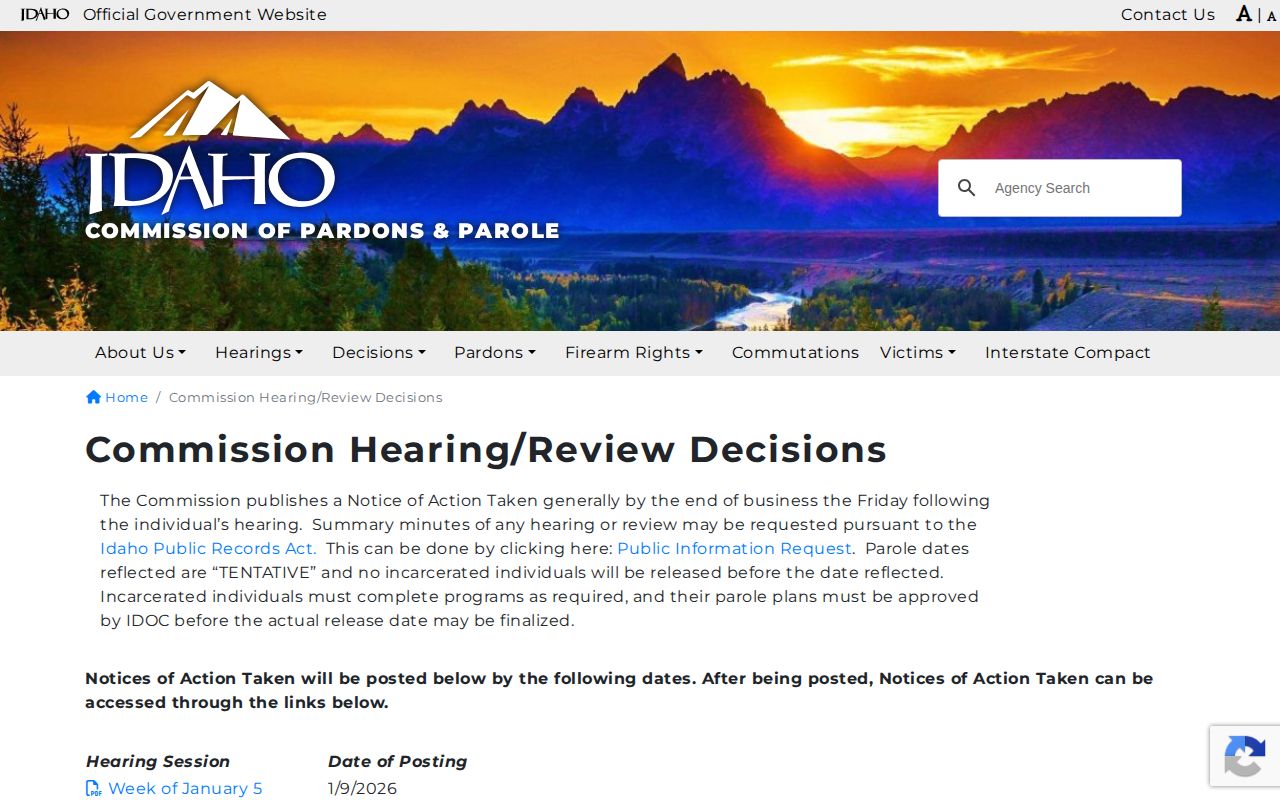
A decision starts or changes the process, but the later IDOC status is stronger proof that the departure occurred.
Why Idaho Release Dates Change
A release date can move because the legal or custody facts change. Multiple sentence rows may have different controlling dates. A new judgment can add a consecutive term. A parole denial or continuation can leave the person confined beyond the earliest eligibility point. A parole grant can create a conditional path before the maximum date, while plan approval and programs can delay the actual departure beyond the tentative date.
| Factor | Possible timing effect | Best source |
|---|---|---|
| Consecutive case | A later controlling term may extend custody. | Judgment, IDOC rows, Sentencing Records |
| Parole action | Grant, denial, or continuation changes the possible route. | Commission Notice of Action |
| Program or plan completion | A tentative parole date may pass before final release. | IDOC and Commission record |
| Violation or forfeiture | Supervision action may alter posture or calculation. | IDOC, Commission, and court record |
| Detainer | The person may transfer directly to another authority. | Custody event and receiving agency |
| Database update | The daily public display can lag a current event. | Responsible records office |
A court order can also change the legal picture. Idaho’s iCourt system provides case and disposition context, while the filing clerk supplies case documents. Neither is a live physical-custody tracker. Match the order to the agency record before treating it as the final release event.
County and state credits also require the right source. IDOC Sentencing Records reviews judgments and applies jail or retained-jurisdiction credit to the state calculation. A county jail calculates its own local sentence under the controlling court order. A searcher should not copy an IDOC date onto a local jail case or assume that time shown in one custody system has already been credited in another. The judgment, sentence rows, and agency calculation must agree.
Confirm an Idaho Inmate Release
After a future date passes, return to the IDOC record. A top status of In community plus a Parole sentence row and a Released to Supervision date can corroborate prison release under continuing supervision. A Probation row may instead show a direct court supervision path. A dated Discharged status indicates sentence satisfaction, which can occur well after the prison exit.
The official in-community detail example demonstrates how status, supervising district, and sentence dates work together.
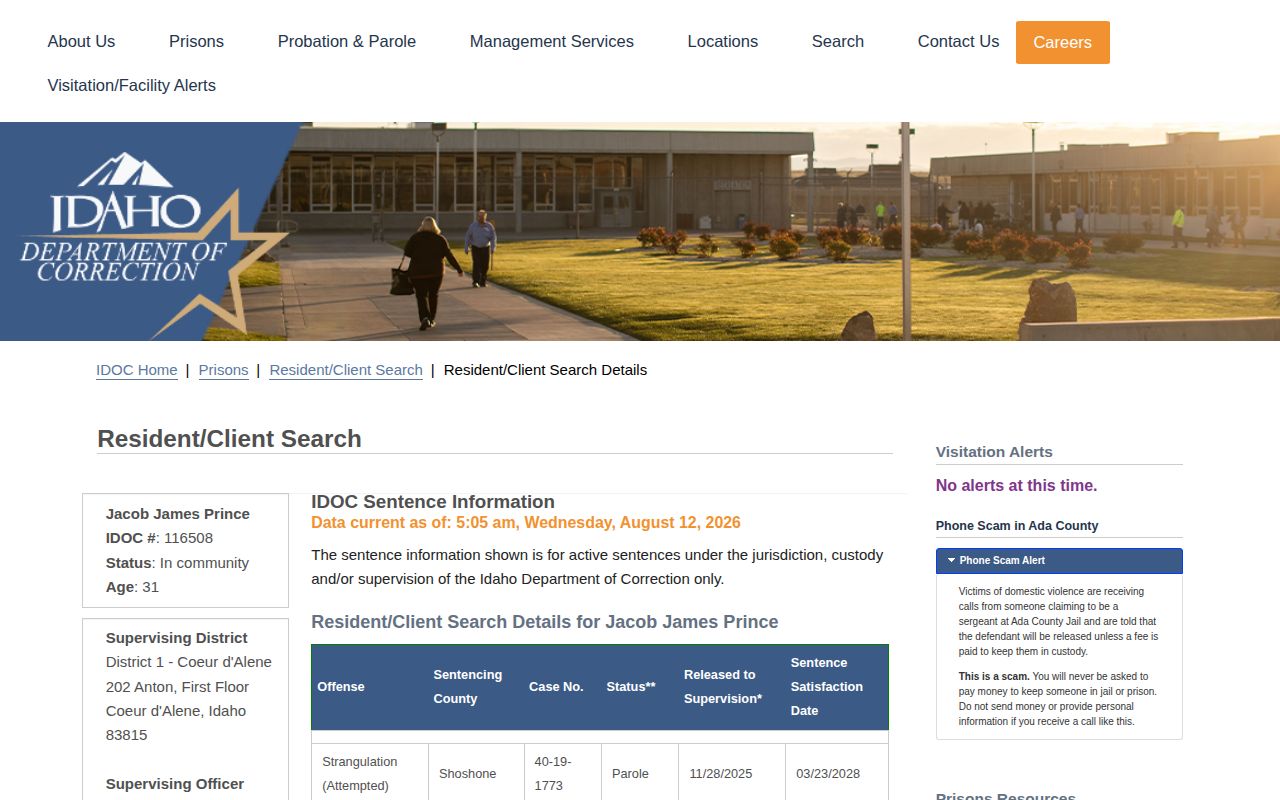
The parole or probation row supplies the context that the broad community label lacks.
For missing or conflicting dates, ask IDOC Sentencing Records through the public-record process. A useful request names the person, IDOC number, sentencing county, case number, and the precise calculation or custody event sought. For a county sentence, contact the sheriff or jail records custodian and the sentencing court instead. A transfer out of one jail is not proof of release to the community.
Timing affects verification. IDOC says the public database updates daily, yet status, location, and scheduled termination data can change quickly. A same-day phone confirmation or focused records request may be needed when travel, reporting, or a court deadline depends on the result. For parole, the supervising district can confirm whether the public office assignment is current. For final discharge paperwork, the Commission explains that the Gold Seal moves through the last supervision district and may take up to a month.
Keep the date trail in order: judgment, eligibility, hearing, tentative decision, actual release to supervision, and sentence satisfaction. Not every case has every event. Still, placing each available record on that sequence exposes gaps and prevents an eligibility date from being reported as a completed release.
The full IDOC Offender Search explanation covers discharge, release-to-supervision records, and requests. A parole decision can also be checked through the Parole Board Hearings record path, but actual departure still needs IDOC confirmation.