
Idaho Commission Hearing Authority
The official state body is the Commission of Pardons & Parole, also written as the Commission of Pardons and Parole or COPP. Seven part-time commissioners decide discretionary parole matters. They also address revocations, pardons, commutations, and qualifying firearm-rights restoration issues. IDOC is separate. It keeps custody and supervision records and completes release processing after a grant.
A parole hearing falls after the fixed part of Idaho’s unified sentence and before any discretionary parole release. The Commission may authorize a path to release, but IDOC must still resolve required programs, approve a parole plan, and complete final paperwork. The Commission’s official site is the source for its schedule and actions, while the IDOC detail record is the better place to verify the later custody event.
The Commission calendar may change. Incarcerated participants attend virtually. Victims arrange attendance or testimony with victim services, while supporters and other members of the public follow the Commission office process and its advance-notice rule. Townhall Idaho also carries hearing agendas and schedules.
Find an Idaho Parole Hearing Date
The authoritative Commission Hearing Schedule publishes hearing weeks and the current posting process. Starting April 3, 2026, the Commission moved to weekly schedule posting by the listed close-of-business dates, generally a Friday for the named following week. The order for a hearing day posts after the prior day’s session closes. Older monthly-cadence language should not displace this newer notice.
- Open the current Commission Hearing Schedule and identify the weekly period that could include the person.
- Open the linked schedule or order. Search the document for the person’s name or IDOC number, then confirm both identifiers.
- Read the meeting type and date. Do not infer an outcome from being listed.
- Recheck the schedule near the hearing because dates, times, and order can change.
- After the event, move to the decision archive and locate the corresponding Notice of Action Taken.
The current Idaho hearing schedule page explains the weekly posting dates and change notices.
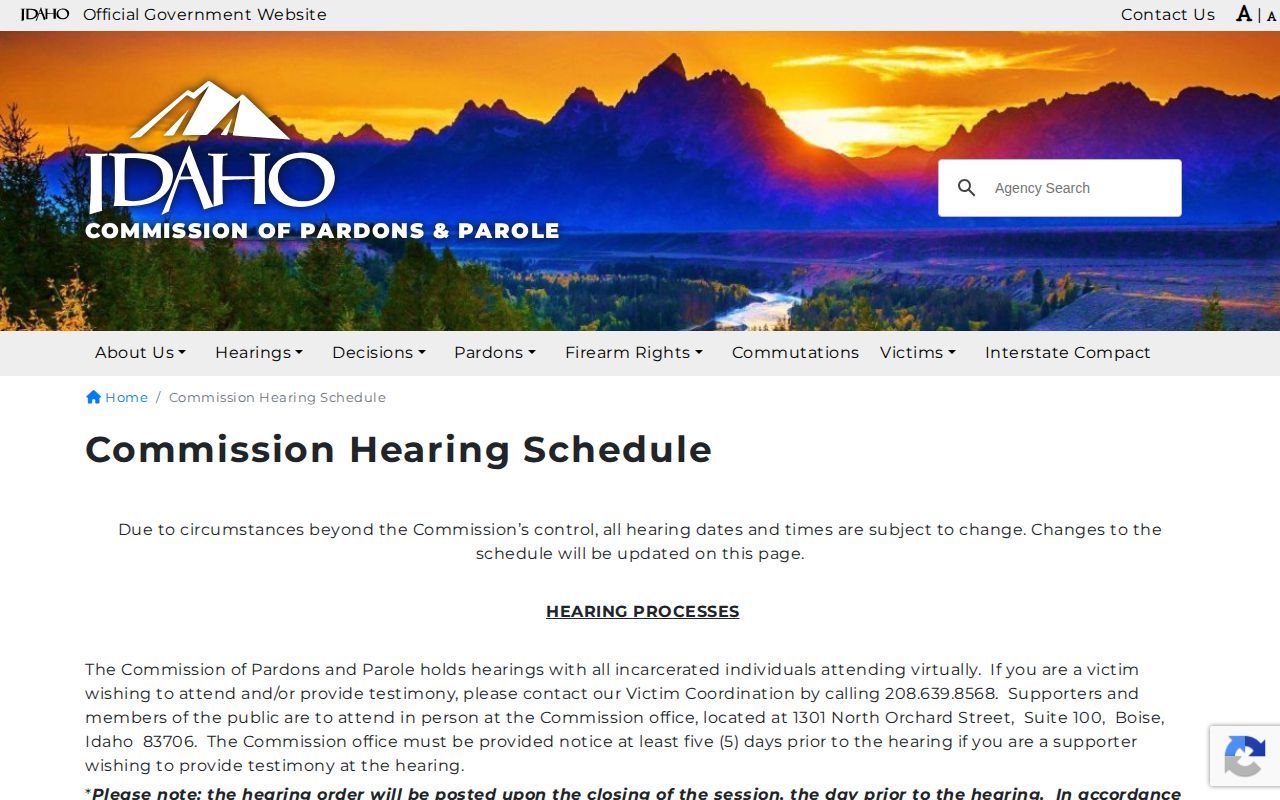
The schedule establishes when Commission review is planned. It does not confirm that the session occurred as listed or that parole was granted.
Note: Recheck the live calendar close to the hearing because the Commission expressly warns that dates and times can change.
Find an Idaho Parole Decision
The Hearing/Review Decisions archive contains weekly and monthly Notice of Action Taken PDFs. It is not a name-query database. The Commission generally posts a notice by close of business on the Friday after the individual hearing. Summary minutes may be requested under the Idaho Public Records Act.
- Select the notice for the hearing week or month.
- Search the PDF by IDOC number first, then match the person’s name and hearing date.
- Read the Subtype, Meeting Type, Decision, NH, and Tentative columns together.
- Interpret the exact decision label. A grant to a detainer is not ordinary community release.
- If parole was granted, check the IDOC status and sentence detail later for a Parole row and Released to Supervision date.
The Commission decisions page groups the action notices and states why tentative dates remain conditional.
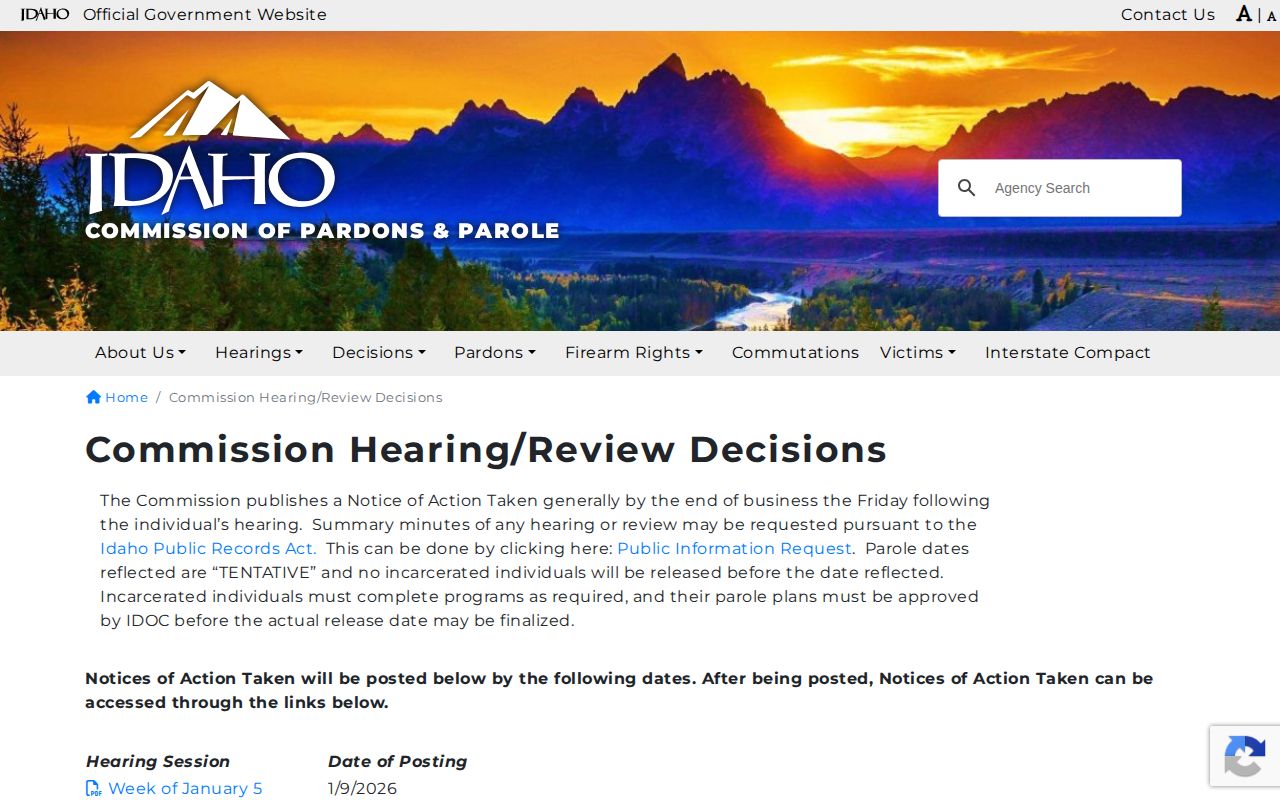
The PDF record answers what the Commission decided. A later IDOC record answers whether and when the person actually left prison for supervision.
Idaho Parole Hearing Outcomes
Commission labels should be read literally. The representative August 3 through 6, 2026 notice shows more detail than a simple granted-or-denied split. Some outcomes move the matter forward, others keep the person in custody, and several concern a person already on a parole path. The table groups the main published meanings without turning them into predictions.
| Published outcome | What it means | Next verification |
|---|---|---|
| Grant Parole | Conditional authority for parole, often with a tentative date | Check programs, plan approval, final IDOC processing, then actual status |
| Grant Parole to Detainer Only | Release is directed to another authority | Identify the receiving custodian; do not call it community release |
| Deny Parole | No parole grant from that review | Read NH or later schedule information |
| Deny and Pass to Full Term | No early parole release; sentence end controls | Review the IDOC satisfaction date and sentence calculation |
| Continue | The decision or hearing is carried forward | Check the stated continuation or next schedule |
| Continue to Full Commission | Further review by the full body is needed | Watch the next Commission action |
| Revoke and Set Hearing | A parole case returns to a hearing process | Check custody status and the new hearing date |
| Revoke and Grant New Parole | Old parole is revoked and a new conditional path is authorized | Confirm the later IDOC release-to-supervision record |
A tentative date is not an actual departure date. Nobody leaves before it, but release may occur later if required steps are unfinished. This is why a decisions PDF must be paired with the corrections record.
The NH column must also be read in the context of its row and notice. It can point toward later review information, while a continuation label can set a new procedural step without deciding parole. If an abbreviation or date is unclear, use the notice as the request anchor and ask the Commission for the matching summary record instead of guessing at its meaning.
Note: A Commission outcome records a decision stage, while the later IDOC status records whether custody or supervision actually changed.
Idaho Parole Eligibility Rules
Idaho’s operational rule starts with the unified sentence in Idaho Code §19-2513. The court sets a fixed, determinate part and may set a later indeterminate part. The fixed term ordinarily must be served before parole can be considered. The Parole Eligibility Date marks the earliest possible consideration, not a right to leave prison.
With multiple sentences, the Commission explains that the latest controlling start of an indeterminate term can determine eligibility. An initial hearing may be scheduled before the eligibility date, so a Next Parole Hearing Date can precede the PED without promising an earlier exit. Idaho Code §20-223 supplies current Commission and department duties plus the timely-release reporting framework. Older versions of that law should not replace the current statute and Commission guidance.
The IDOC custody detail example places Parole Eligibility Date, Next Parole Hearing Date, and Sentence Satisfaction Date in one record.
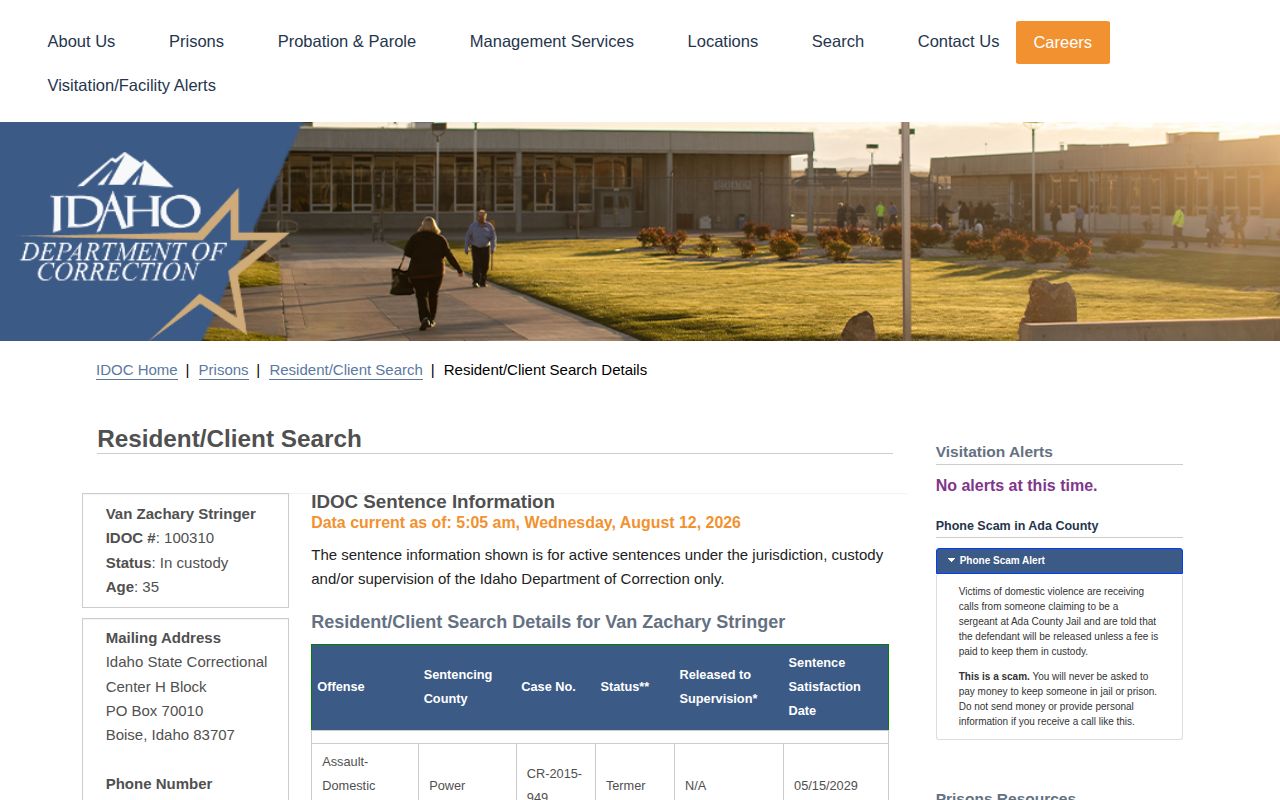
Each date answers a different question. The hearing date marks review, eligibility marks the legal threshold, and satisfaction points to the sentence end.
Idaho does not use ordinary modern good-time deductions to shorten the fixed term. IDOC sentence policy limits the legacy statutory schedule to offenses committed before July 1, 1986. Exceptional meritorious reduction is a narrow, discretionary power and not an entitlement. These rules matter because a generic earned-time estimate can place the supposed hearing or release threshold too early.
Confirm Release After Idaho Hearings
After a grant, return to the Resident/Client Search. A person still listed In custody has not been confirmed as released to community supervision. A later In community status must be read with the sentence row. A Parole row plus Released to Supervision is the stronger public combination for a completed prison-to-parole move.
The IDOC community detail view demonstrates the office, parole row, supervision date, and sentence-end date used for this check.
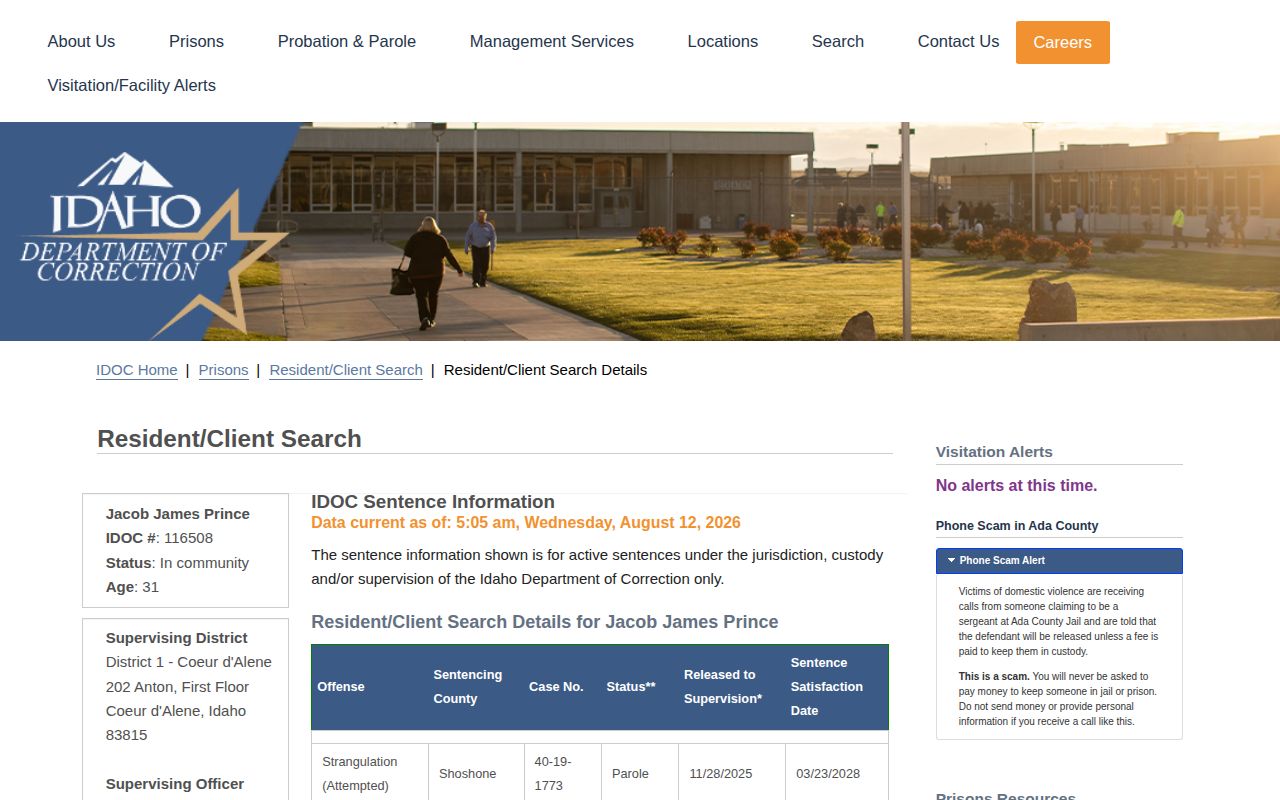
The supervision date is retrospective. It is better release evidence than a tentative Commission date, although fast-changing data may still call for district confirmation.
A detainer changes the route. Grant Parole to Detainer Only means the person is released to another authority, not necessarily onto an Idaho street. A full-term result may eventually appear as a dated discharge, while a revocation action can return a person to custody. For how IDOC manages a finalized community case, use the Idaho parole and probation overview.
Idaho Hearing Record Requests
The posted Notice of Action is the fastest public decision record, but it is not the only Commission material. The decisions page says summary minutes may be requested under the Idaho Public Records Act. A focused request should identify the person, IDOC number, hearing date, notice, and exact record sought. That scope helps the Commission find the right action while leaving room for lawful redaction or denial.
Idaho public-record timing depends in part on requester residence. When more retrieval time is needed, current law permits up to ten working days for an Idaho resident request and up to 35 days for a nonresident request. Those periods are outside limits, not promises that each request will take that long. A written denial or partial denial must state its legal basis and address attorney review or the chance to consult counsel.
For sentence calculations, credits, and the final custody-status history, IDOC remains the right agency. Its Sentencing Records unit reviews judgments and maintains sentencing information, but it cannot alter a judicial sentence. The Commission record proves what the Commission did; IDOC and court records establish the surrounding sentence and later correctional event.
Note: Request a named hearing record instead of an entire file, since correctional, victim, security, and investigatory material may be protected.
Idaho Clemency and Pardon Reviews
The same Commission that decides parole also considers pardons, commutations, and specified firearm-rights restoration matters. These are separate functions. A pardon application is not a parole release record, and a clemency session should not be read as proof that custody ended.
The Commission’s pardon information describes application reviews during January, April, July, and October sessions. Particular serious offenses follow special constitutional and statutory treatment. The clemency record must be paired with the underlying court and IDOC records to understand its actual effect.
That separation prevents a common error. Parole changes where an eligible person may serve the remaining sentence. A pardon addresses clemency. Sentence satisfaction ends the correctional term. The three can involve the same Commission or person without being the same event.
A commutation likewise needs its own record. It can change a sentence without functioning as a routine parole grant. The exact Commission action, any court effect, and the later IDOC status should be checked in order. A clemency calendar entry by itself says only that a matter entered that review channel.
Idaho Hearings Now Post Weekly
The 2026 cadence is a distinct feature of Idaho parole board hearings. Weekly schedule posting began with the April 3 change, and the daily order follows after the previous day’s session closes. The result archive generally follows by Friday after the hearing. That sequence creates three records at three stages: the planned weekly schedule, the day order, and the later Notice of Action.
None is a live prison-release list. A late schedule change can affect the first two, while a conditional grant in the third still needs IDOC completion. A careful check follows the sequence instead of stopping at the first favorable line.
The new cadence also makes dates important when saving a record. Keep the schedule week, hearing date, decision-notice date, and any tentative parole date as separate entries. Then add the later Released to Supervision date only if IDOC supplies it. A compact timeline prevents a posted decision date from being mislabeled as the day the person left prison.
Note: The weekly schedule, daily order, decision notice, and IDOC release record describe separate stages and may update on different days.